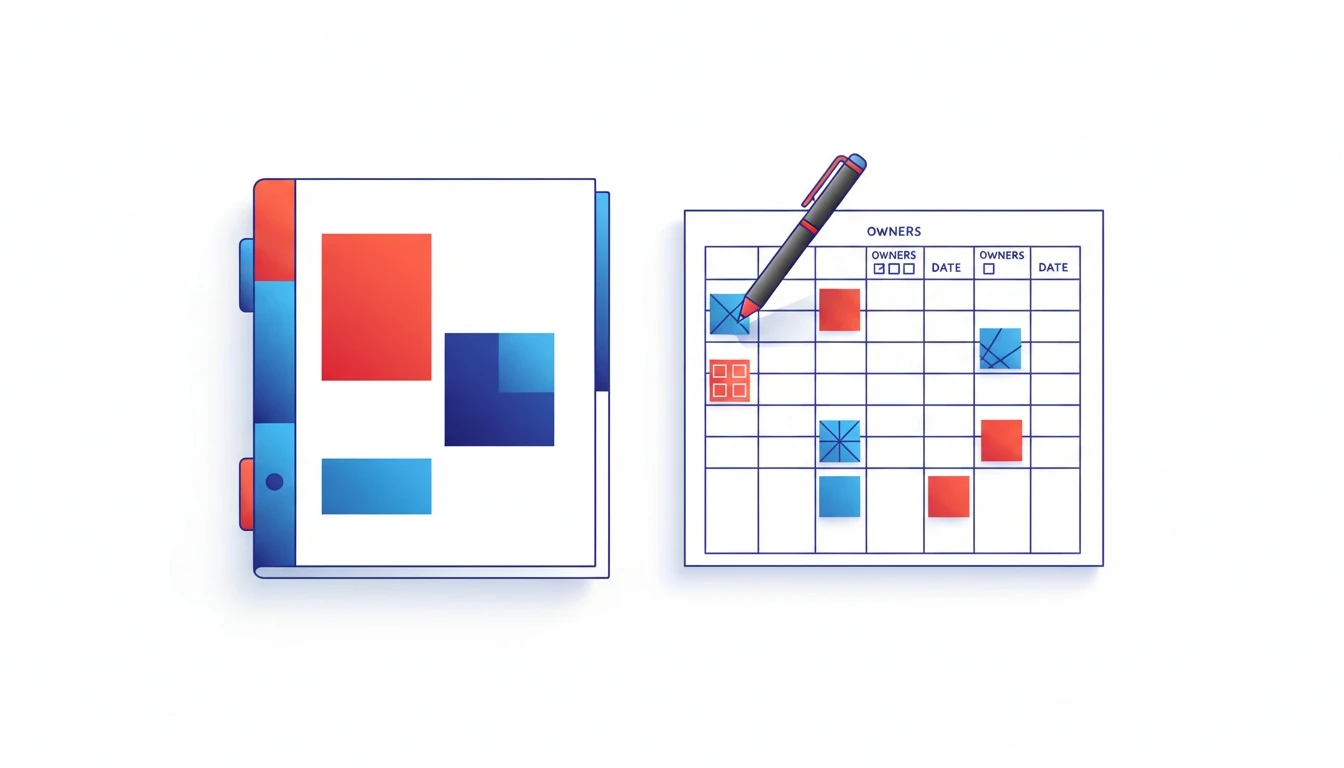
What is decision support system dss?

A decision support system, or DSS, is an interactive information system that helps a person or team evaluate alternatives. It usually combines internal or external data, analytical models, business rules, assumptions, and an interface through which users can test choices.
The defining word is support. A DSS may rank vendors, forecast capacity, expose tradeoffs, or show how a pricing decision behaves under different churn assumptions. The accountable manager still decides.
This makes a DSS particularly useful for semi-structured decisions. Parts of the problem can be calculated, while other parts require judgment. Vendor selection is a good example: subscription cost and implementation time are measurable, but confidence in the vendor's roadmap or support quality requires informed assessment.
| Decision structure | Characteristics | Suitable system |
|---|
| Structured | Repetitive, stable rules, predictable inputs | Workflow or rules-based automation |
| Semi-structured | Measurable criteria plus uncertain assumptions | Decision support system |
| Unstructured | Novel problem, limited precedent, ambiguous objectives | Facilitated judgment supported by scenarios |
| High-volume transactional | Frequent, low-discretion decisions | Operational automation with exception handling |
A management information system typically reports what has happened: revenue by segment, incident volume, renewal rates, or inventory levels. A DSS uses those inputs to examine what should happen next. Reporting might show that infrastructure costs increased; decision support compares reserved capacity, architectural changes, a vendor migration, and the consequences of delaying action.
How does a DSS turn data and judgment into recommendations?
A decision making support system turns an unclear problem into a structured comparison. The quality of its output depends less on sophisticated presentation than on whether it preserves the chain from objective to evidence, assumption, model, recommendation, and consequence.
A practical DSS contains several connected layers:
| Component | Operational purpose | Failure when missing |
|---|
| Decision definition | States the objective, scope, owner, and deadline | Teams solve different versions of the problem |
| Data layer | Supplies costs, demand, risk, performance, and constraints | Recommendations depend on anecdotes |
| Model or rule layer | Calculates scores, forecasts, probabilities, or thresholds | Tradeoffs remain implicit |
| Scenario engine | Changes assumptions and recalculates outcomes | One forecast is treated as certainty |
| User interface | Shows options, evidence, and consequences | Users cannot inspect or challenge the result |
| Decision record | Captures assumptions, approval, and review date | The rationale disappears after approval |
The operating sequence should be explicit:
- Frame the decision. Define the outcome, decision owner, deadline, constraints, and excluded questions. The guidance on turning business goals into strong analysis questions is useful when a request such as "choose the best platform" is too vague to model.
- Build the option set. Include the status quo, delay, staged adoption, and credible alternatives. A DSS cannot recover an option that the team omitted.
- Connect evidence to criteria. Map each cost, risk, dependency, and benefit to its source. Label estimates separately from observed data.
- Run scenarios and sensitivity tests. Change demand, budget, timing, probability, or weight assumptions. Record when the preferred option changes.
- Document the decision. Save the recommendation, dissent, chosen path, assumptions, and review trigger.
The last two steps reduce cognitive bias in decision-making. A dominant sponsor can still influence the inputs, so software alone does not control anchoring or confirmation bias. Teams need explicit challenge roles and can use a decision-making bias checklist for team reviews before approval.
What types of decision support systems exist?
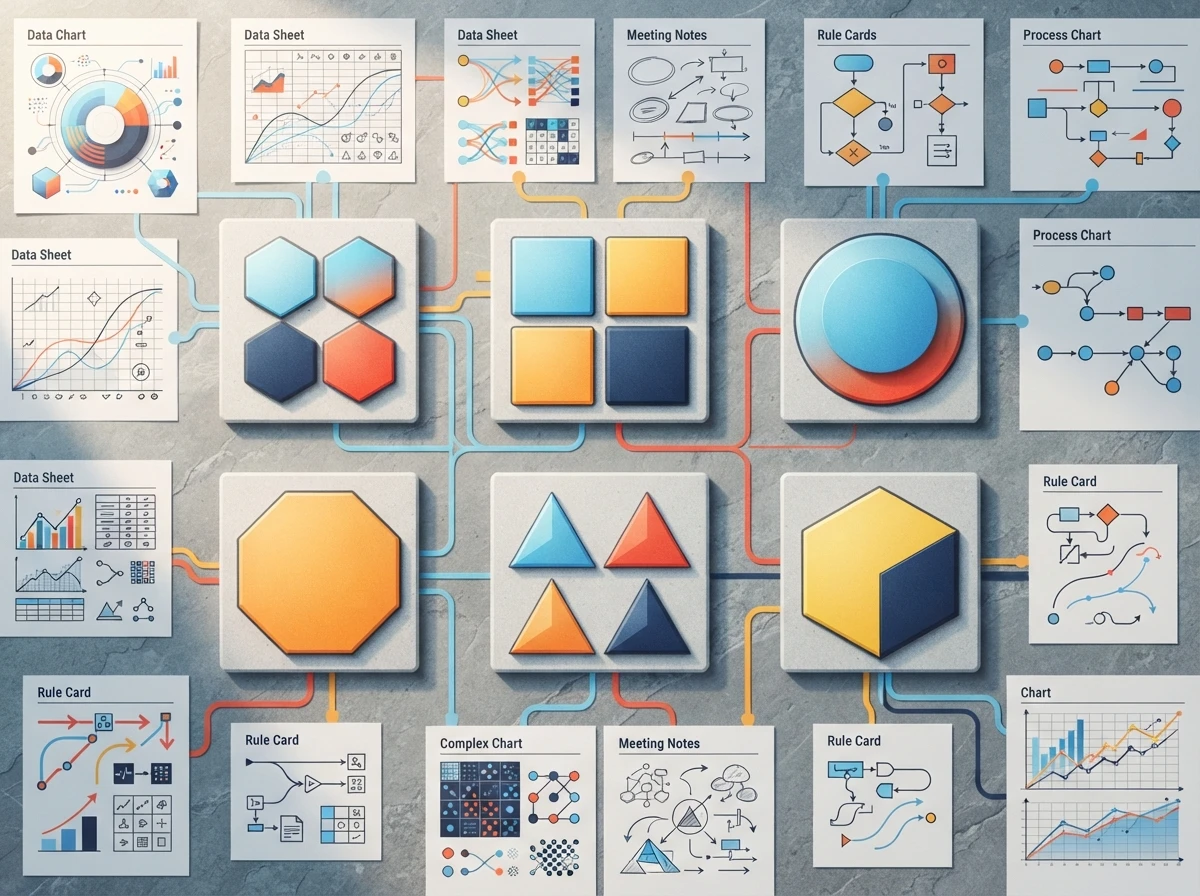
Decision support systems are commonly classified by the main resource they use to generate insight. The categories overlap, and a mature platform may combine several of them.
| DSS type | Primary resource | Typical business use | Example output |
|---|
| Data-driven | Databases, warehouses, live metrics | Capacity planning, customer segmentation | Trend, variance, or forecast |
| Model-driven | Financial, statistical, optimization, or simulation models | Pricing, inventory, resource allocation | Ranked result or projected outcome |
| Knowledge-driven | Rules, policies, expertise, or learned patterns | Compliance checks, diagnosis, guided recommendations | Suggested action with rationale |
| Document-driven | Contracts, reports, policies, research | Contract review, policy comparison | Relevant evidence by option |
| Communication-driven | Shared inputs, discussion, voting, and review | Cross-functional prioritization | Consolidated team decision |
| Hybrid | Several resources combined |
A clinical decision support system CDSS is a specialized knowledge-driven or data-driven application used in healthcare. The US Food and Drug Administration's clinical decision support guidance distinguishes certain support functions from software functions that may fall under medical-device oversight. That distinction matters because explainability, intended users, and whether clinicians can independently review the basis of a recommendation affect governance.
An engineering decision matrix is usually model-driven. It assigns criteria, weights, and option scores, then calculates a comparative result. A plain matrix is a narrow tool inside the broader DSS category; it rarely manages source data, scenario branches, collaboration, or decision history on its own.
What is decision support system dss used for?
A DSS is used when several viable paths have different costs, risks, dependencies, and future consequences. Product and operations teams gain the most value when changing one assumption could legitimately change the recommendation.
| SaaS decision | Useful inputs | DSS analysis | Decision control |
|---|
| Pricing change | Conversion, churn, support cost, margin | Compare price points under adoption scenarios | Pilot threshold and rollback trigger |
| Vendor selection | Total cost, security findings, migration effort, service terms | Weighted comparison plus constraint testing | Security veto and contract review |
| Capacity planning | Demand forecast, utilization, lead time, unit cost | Base, high-demand, and delayed-purchase scenarios | Capacity review trigger |
| Risk treatment | Likelihood, impact, control strength, treatment cost | Accept, mitigate, transfer, or avoid comparison | Named risk owner and review date |
A decision making matrix works well when criteria are stable and options can be scored consistently. It works poorly when the team needs branching consequences, uncertain timing, or changing constraints. In that case, scenario planning tools, decision trees, simulation, or real options analysis provide more useful structure.
Real options analysis treats flexibility as having economic value. A staged rollout, for example, may have a lower immediate return than a full launch but preserve the option to expand, pause, or exit after new evidence arrives. The UK government's Green Book guidance on appraisal and evaluation emphasizes comparing options, uncertainty, risk, and wider consequences rather than relying on a single headline forecast.
Lucid serves this category by converting a written or recorded dilemma into an options map with advantages, disadvantages, and future consequences. Users can change a constraint and refine every path, then review the decision through Grid, Table, or Focus views.
How does decision support differ from decision automation?
Decision support informs a human choice; decision automation executes a choice under predefined conditions. The practical boundary depends on discretion, reversibility, regulatory exposure, and the harm caused by an incorrect result.
A renewal reminder can be automated because the action follows a stable rule and creates limited harm. Rejecting a strategic supplier, changing customer pricing, or accepting a major security risk calls for review because context and accountability matter.
| Capability | Decision support | Decision automation |
|---|
| Primary output | Comparison or recommendation | Executed action |
| Human role | Reviews evidence and chooses | Sets rules and handles exceptions |
| Best fit | Ambiguous or consequential decisions | Frequent decisions with stable rules |
| Explanation need | Assumptions and tradeoffs must be visible | Rule, threshold, and exception must be traceable |
| Failure control | Challenge, approval, scenario testing | Monitoring, override, rollback |
Automation also creates decision-making bias when a score looks more objective than its inputs deserve. A model trained on incomplete history or a risk score based on inconsistent scales can produce a precise answer with weak foundations.
For AI-assisted systems, the NIST AI Risk Management Framework provides a useful governance structure organized around governing, mapping, measuring, and managing risk. Teams applying a DSS to high-impact choices should preserve source evidence, model assumptions, human overrides, and monitoring criteria.
What should teams evaluate before implementing a DSS?
Evaluate a DSS against the decisions it must improve, the evidence it can access, and the controls the organization will maintain. Buying a powerful modeling platform for an occasional, low-impact choice adds administration without improving judgment.
Start with a decision inventory. Identify which decisions recur, who owns them, what data exists, where judgment enters, and what happens when the decision is wrong. The distinction between analytical, consultative, consensus, and delegated choices is covered in decision-making types for product teams.
Then test these implementation questions in a real decision:
| Evaluation area | Question to ask | Acceptance evidence |
|---|
| Decision fit | Does the system handle structured, semi-structured, or unstructured work? | A representative decision can be modeled without distortion |
| Data quality | Can users see source, date, owner, and uncertainty? | Inputs are traceable and stale data is flagged |
| Model transparency | Can a reviewer understand scores and formulas? | Assumptions and calculations are inspectable |
| Scenario capability | Can constraints change without rebuilding the analysis? | Alternatives recalculate consistently |
| Collaboration | Can contributors challenge inputs without erasing history? | Comments, ownership, and version history persist |
| Governance | Who approves, overrides, and reviews the decision? | Named roles and review triggers exist |
| Integration | Can the tool use current operational evidence? | Data movement has an owned, maintainable method |
Sensitivity testing deserves particular attention. If a tiny change in one weight reverses the ranking, the recommendation is fragile. Use MCDA sensitivity analysis to test whether a preferred option holds, and record the switching point rather than reporting only the winning score.
Risk scoring needs the same discipline. Define likelihood and impact scales in observable terms, name control owners, and set a review date. A SaaS risk control matrix example with scoring and ownership shows how to prevent a matrix from becoming a static artifact nobody updates.
A spreadsheet remains sufficient when one owner faces a contained comparison with stable criteria and limited need for reuse. Analytics software fits questions driven mainly by historical data. Collaborative decision-making software becomes worthwhile when several functions must contribute evidence, assumptions change frequently, or leaders need a defensible record of why one path was chosen.
Frequently Asked Questions
What are examples of decision support tools?
Examples include weighted decision matrices, forecasting models, optimization engines, scenario planning tools, decision trees, simulation software, risk models, and collaborative option maps. The right tool depends on whether the decision is driven mainly by data, rules, uncertainty, or team judgment.
What are the four types of support systems?
A common simplified taxonomy lists data-driven, model-driven, knowledge-driven, and communication-driven systems. Some classifications also include document-driven and hybrid systems, so there is no universal four-category standard.
What is the most famous decision matrix?
The weighted decision matrix is among the most widely used because it compares options against criteria with assigned weights. The Pugh matrix is also common in engineering, where concepts are compared with a reference design.
What is the 10-10-10 rule for decisions?
The 10-10-10 rule asks how a choice may feel or perform in 10 minutes, 10 months, and 10 years. It is a perspective prompt rather than a full DSS because it does not systematically model evidence, uncertainty, or competing criteria.
A useful DSS makes assumptions inspectable, consequences comparable, and revisions manageable when conditions change. Choose one representative decision, model it with real evidence, challenge the recommendation, and test whether the record would still make sense six months later. To turn an unstructured dilemma into a structured options map, sign up for Lucid.