What do risk management services include?
Risk management services range from a focused assessment to ongoing support for insurance, safety, cybersecurity, or enterprise oversight. The label covers different professions. Start by identifying the problem you need resolved, then select the relevant specialist.
| Service area | Typical work | Useful output to request |
|---|
| Enterprise and operational risk | Examine business dependencies, disruption scenarios, and governance | Prioritized exposures with accountable owners and treatment decisions |
| Insurance and claims support | Review coverage needs, support placement, and assist with claims | Coverage analysis, exclusions review, and a documented claims process |
| Safety and loss control | Identify workplace hazards and recommend preventive measures | Hazard findings with corrective actions and verification requirements |
| Cybersecurity and third-party risk | Assess systems, sensitive data, and supplier dependencies | Evidence-backed findings and a remediation plan |
| Business continuity | Examine disruption impacts and recovery arrangements | Recovery priorities and tested response procedures |
An insurance broker may identify coverage gaps without testing whether your backups can restore critical data. A cybersecurity assessor may examine access controls without advising on policy wording. Check the engagement’s boundaries, especially when a proposal uses broad terms such as “comprehensive protection.”
For workplace safety, OSHA’s hazard identification and assessment guidance includes inspections and incident investigation. That requires different evidence from a financial or contractual review. Relevant industry expertise matters more than a broad service catalog.
What should a risk assessment actually deliver?

A risk assessment should explain what could happen, why it could happen, and how existing controls affect the consequences. It should distinguish verified evidence from assumptions. Management then needs enough information to decide whether to reduce, transfer, avoid, or accept the remaining exposure.
Require each material finding to connect a cause, event, and consequence. “Vendor risk” is too broad. “An outage at the identity provider prevents customer sign-in, interrupting contracted service” identifies a dependency you can investigate and a consequence you can evaluate.
The assessment should document the affected objective, existing controls, supporting evidence, and uncertainties. It should also identify residual risk: the exposure remaining after controls are considered. Keep proposed controls separate from controls already operating.
A policy document proves that a rule exists. It does not prove people follow it. Ask the assessor to distinguish document review from implementation checks and effectiveness testing, with the agreed testing depth stated in the proposal.
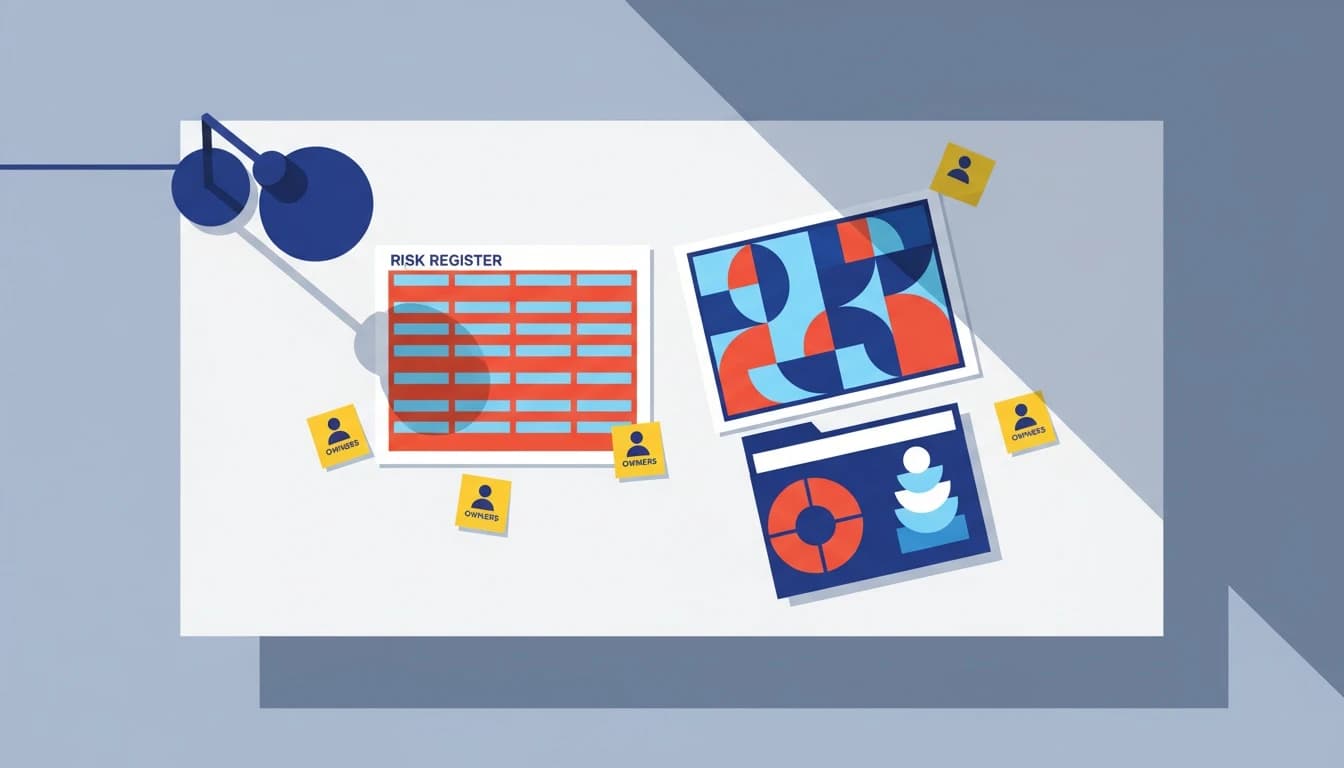
For tracking purposes, understanding the difference between a risk register and a risk control matrix helps you request the right handover. A register tracks exposures and responses, while a control matrix connects risks to controls and supporting checks.
Reject unexplained scores. If a provider uses likelihood and impact ratings, request their definitions and evidence requirements. Guidance on scoring likelihood and impact in a risk control matrix can help you challenge ratings that look precise but rest on weak assumptions.
How do you choose the right scope and provider?
Choose a provider whose expertise matches the decision, operating environment, and required evidence. Before comparing proposals, define the activity under review and the decision the assessment must support. Otherwise, providers may quote different work under the same service name.
For a cybersecurity engagement, the NIST Cybersecurity Framework provides outcomes for understanding and managing cybersecurity risk. Ask providers which outcomes they will assess and what evidence they require. A framework reference alone does not establish testing depth or demonstrate that controls work.
Request a redacted sample deliverable where confidentiality permits. Look for traceable findings, clear limitations, and recommendations an operational owner could implement. Ask who performs the work, which specialists review it, and whether subcontractors will access your information.
Commercial incentives also matter. If a provider recommends insurance or remediation products it sells, ask how it discloses compensation and manages conflicts. For regulated activities, verify applicable professional qualifications or licensing with the relevant authority.
When searching locally, confirm jurisdictional expertise and whether the work requires site visits. Physical hazard inspections may need on-site access. Other engagements can use remote interviews and evidence review, subject to security and confidentiality requirements.
Worked example: assessing a SaaS market-entry decision
Consider a SaaS team deciding whether to enter a new market using its current platform or a local implementation partner. The team has scattered concerns about data handling, support coverage, and supplier dependence. It needs a scoped assessment that turns those concerns into comparable paths.
Frame the decision first: “Which launch route can meet our customer commitments within our operational capacity?” Legal counsel should address jurisdiction-specific legal requirements. Technical and operational specialists should assess whether the proposed arrangements can function as intended.
| Launch path | Evidence to request | Conditional consequence | Decision condition |
|---|
| Launch directly | Data-flow map, support arrangements, and recovery evidence | Uncovered support hours could delay incident response | Proceed only after support ownership and escalation are verified |
| Use a local partner | Contract terms, access controls, subcontractor details, and exit arrangements | Partner access could increase exposure and complicate investigations | Proceed only with acceptable access restrictions and workable termination provisions |
| Delay entry | Outstanding requirements, remediation dependencies, and commercial commitments | Delay reduces immediate exposure but postpones market learning | Reconsider when specified evidence gaps are closed |
The assessment should investigate these conditions rather than merely score the paths. For example, a contractual promise to notify you of incidents needs an operational escalation process. Ask who receives the notification, who can act, and how that process will be checked.
Use a structured decision-making process to keep the alternatives comparable while evidence develops. If the partner changes its subcontractors or the launch scope expands, reopen the affected assumptions. An earlier recommendation may no longer hold.
Copy this scope template into your request for proposals:
Decision to support:
Business objective:
Activity, locations, systems, and suppliers in scope:
Explicit exclusions:
Relevant legal or contractual requirements:
Internal decision owner:

Risk questions to investigate:
Evidence available:
Known evidence gaps:
Required interviews, inspections, or tests:
Restrictions on data access and sharing:

Required deliverables:
- Findings linked to evidence and affected objectives
- Existing controls and the depth of verification performed
- Assessment criteria and key assumptions
- Remaining exposure and proposed treatment options
- Action owners and dependencies
- Conditions requiring reassessment

Acceptance criteria:
Each material finding identifies its evidence, consequence,
existing controls, uncertainties, and recommended next action.

Implementation responsibilities:
Who may accept remaining exposure:
Target decision date:
Fee basis, expenses, and change-control terms:
How much do risk management services cost?
The cost depends on scope, specialist expertise, and the depth of verification. A document-based review requires different effort from site inspections, technical testing, or ongoing claims support. A useful quote makes those differences visible.
Compare proposals using the same scope template. Separate assessment fees from implementation, retesting, travel, software, and ongoing support. Check whether interviews and revision rounds are included, and identify what triggers additional charges.
Ask providers to tie completion to acceptance criteria, not simply delivery of a report. If recommendations remain too vague to assign or findings lack agreed evidence, the engagement has not produced the decision support you requested.
Retained support can suit recurring reviews or changing operations. A fixed-scope project can suit a bounded decision. In either case, retain an internal owner who can authorize action and accept remaining exposure within their authority.
Frequently Asked Questions
Why is risk management calling me?
A caller using that description might represent an insurer, claims administrator, employer, or another organization. Verify their identity through an independently obtained contact number before sharing personal, financial, or claim information.
Are risk management services the same as insurance?
No. Insurance can transfer specified financial consequences under policy terms, while risk management also addresses prevention, operational controls, and recovery. Coverage remains subject to exclusions, limits, and other conditions.
Can a small business manage risk without hiring a consultant?
Yes, an internal owner can assess familiar activities when the necessary expertise and evidence are available. Seek specialist help when legal obligations, technical uncertainty, or potential consequences exceed your team’s competence.
Does outsourcing risk assessment transfer accountability?
Outsourcing assigns work according to the engagement terms, but management generally retains responsibility for business decisions. Document who approves treatments and who has authority to accept remaining exposure.
For the SaaS launch decision, verify the support arrangements and partner-access evidence before approving a path. Lucid lets you turn written or recorded thoughts into an options map, compare advantages and consequences, and refine the comparison as constraints change. Sign up for Lucid to map the alternatives and identify what still needs verification.