Consensus Decision Making Techniques That Work | Lucid
Consensus Decision Making Techniques That Work
9 min read
Consensus decision making techniques work when you treat the room like a system, not a debate. System analysis helps you surface options, measure real agreement (not loud agreement), and move a group forward without burning trust. Below is a field-tested playbook for gradients of agreement, silent voting, and structured rounds you can run in 30-60 minutes.
Why consensus stalls (and how system analysis fixes it)
Consensus decision making fails in predictable ways: the group confuses “no objections” with “real support,” the loudest voice sets the frame, or people agree publicly and sabotage privately. I’ve watched teams lose weeks to this pattern, then lose more time repairing relationships after a rushed call.
System analysis is the antidote because it forces you to model the decision as an input-output machine. Inputs are constraints, risks, and stakeholder needs. Outputs are options with consequences. The facilitator’s job is to keep the system observable: what are we deciding, what counts as a good outcome, and what evidence would change our mind?
If your team is still arguing about which decision approach to use, start with a shared baseline. Lucid’s guide on how to choose a decision framework for your team is a good primer to align on when consensus is worth it and when it’s not.
A consensus meeting should always produce one of three outcomes: a decision, a narrowed shortlist with a clear next experiment, or a documented “not now” with revisit criteria. Anything else is theater.
Gradients of agreement: the fastest way to find real consensus decision making
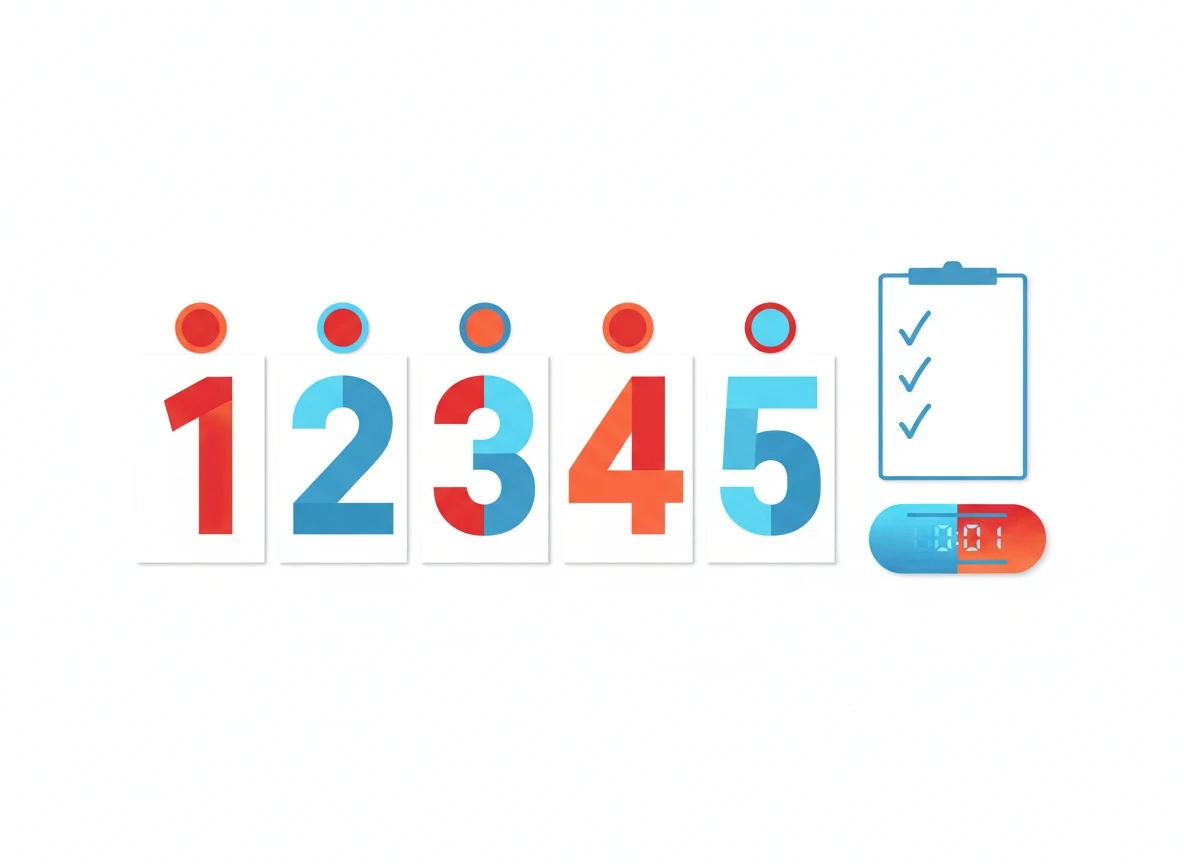
Gradients of agreement is a technique that replaces binary “agree/disagree” with a scale that reveals where support is strong, where it’s weak, and where objections are serious. The first sentence I use to introduce it is: “We’re not voting on who wins, we’re measuring how safe it is to move.”
Here’s a practical scale you can run verbally or in a doc:
Score
Meaning
What the facilitator does next
5
Strong support
Capture why, that becomes decision rationale
4
Support
Move on unless risks emerge
3
Can live with it
Ask: “What would move you to a 4?”
2
Concerned
Ask for the specific condition or mitigation
1
Block
Treat as an objection that must be resolved or escalated
Two rules make this technique actually work.
First, a “2” must come with a concrete concern. “I don’t like it” is not decision logic. “This breaks our on-call capacity because it adds a new failure mode” is.
Second, a “1” must name the principle being protected (safety, legality, customer trust, budget). This prevents “block” from being used as a power move. In healthy groups, blocks are rare.
If you want the scale to be more than a vibe check, record the distribution in your notes and revisit it after implementation. This is how you build a learning loop and reduce future conflict. It’s also how you spot decision-making bias over time, especially authority bias and status quo bias (both are well-documented in behavioral research summarized by sources like the APA overview of cognitive biases).
Silent voting: a facilitation technique that protects truth from hierarchy
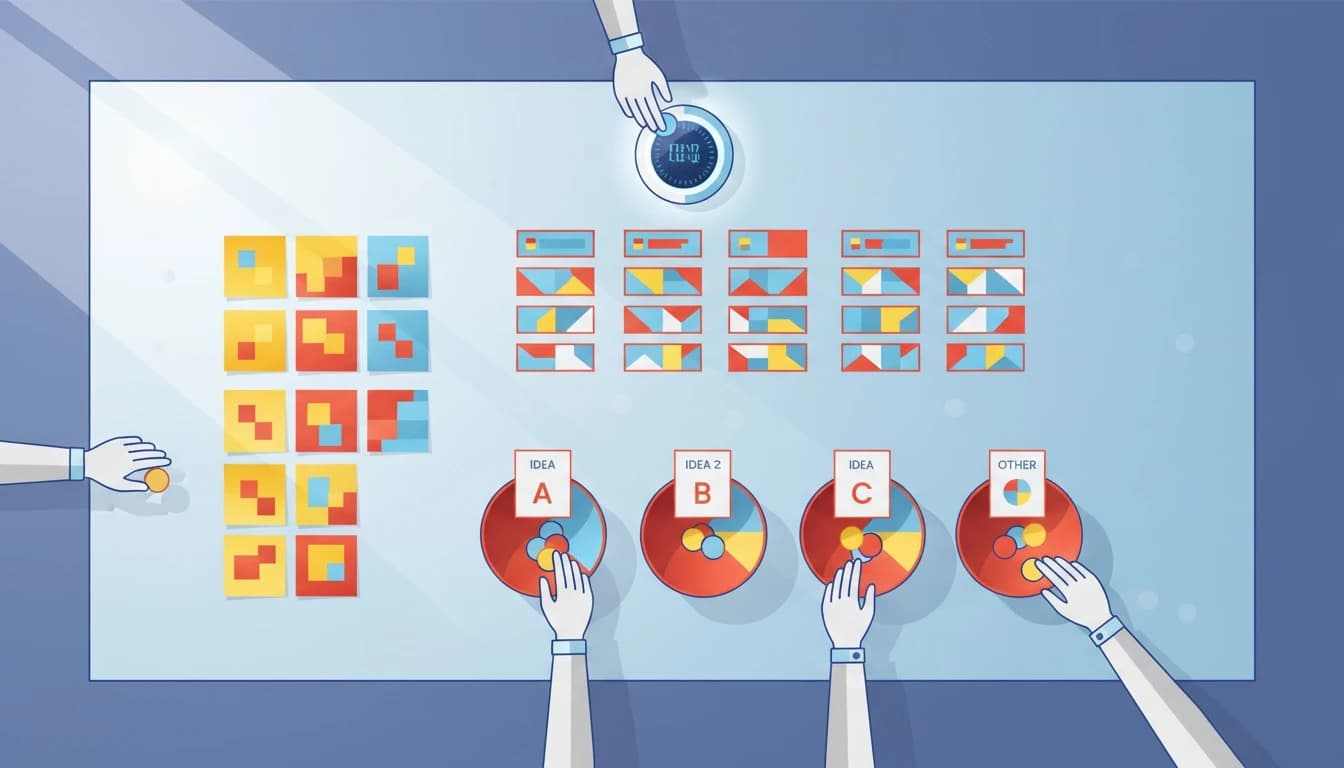
Silent voting is the simplest way I know to improve group decision making quality in hierarchical rooms. The definition is straightforward: everyone submits their preference at the same time, without discussion, often with a short written rationale.
This technique works because it reduces two killers of consensus: anchoring on the first suggestion and deferring to senior voices. It’s the same reason many product teams use silent brainstorms before discussion.
A tight format looks like this:
Present 2-4 options (or ask for them, then freeze the list).
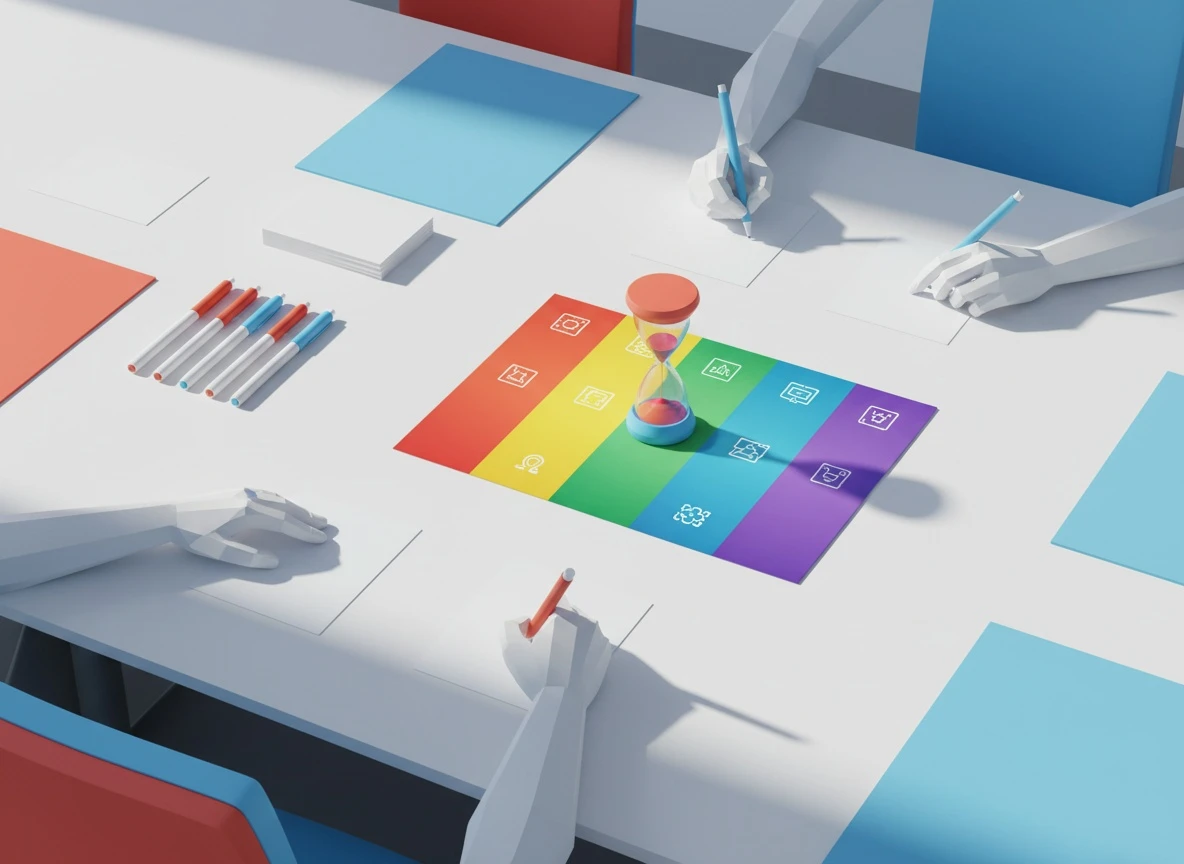
Give 3 minutes of silence for each person to pick an option and write one sentence: “I prefer X because…”
Collect votes simultaneously (form, chat, or physical tokens).
Read rationales out loud before debate.
That “read rationales first” step is where the quality jumps. You get decision logic without cross-examination. You also surface hidden constraints early, which is usually what the quietest person in the room was trying to protect.
If you want to level up, combine silent voting with a simple decision making matrix. For example, score each option on cost, reversibility, time-to-value, and risk. You can keep it lightweight, but the act of scoring forces specificity.
For teams that want a reusable approach, I recommend standardizing your criteria. Lucid’s Decision Frameworks: the complete guide is useful for picking criteria that match your operating model (speed vs certainty, autonomy vs alignment).
Structured rounds: a decision making process that preserves trust
Structured rounds are the backbone of trust-preserving consensus. The definition: you move the group through fixed phases so people feel heard, objections are handled cleanly, and the meeting doesn’t devolve into looping debate.
When I facilitate high-stakes decisions, I run this sequence because it prevents the two most common failure modes: premature solutioning and endless re-litigating.
The 5-round consensus script (run it exactly once)
This is one of the few places where strict order matters:
Proposal (2 minutes): One person states the proposed decision and success criteria.
Clarifying questions (5 minutes): Only questions, no opinions. If someone starts arguing, stop them.
Reactions (8 minutes): Each person shares a short reaction. No interruptions.
Objections and risks (10 minutes): Only “2s” and “1s” from the gradient scale speak first. Capture mitigations.
Revise and confirm (5 minutes): Update the proposal live, then re-score gradients.
This looks rigid on paper, but it feels relieving in practice. People stop fighting for airtime because they know they’ll get a turn. The facilitator’s job is to enforce the contract.
A key line I use: “Reactions are not rebuttals.” That single sentence prevents the meeting from turning into a courtroom.
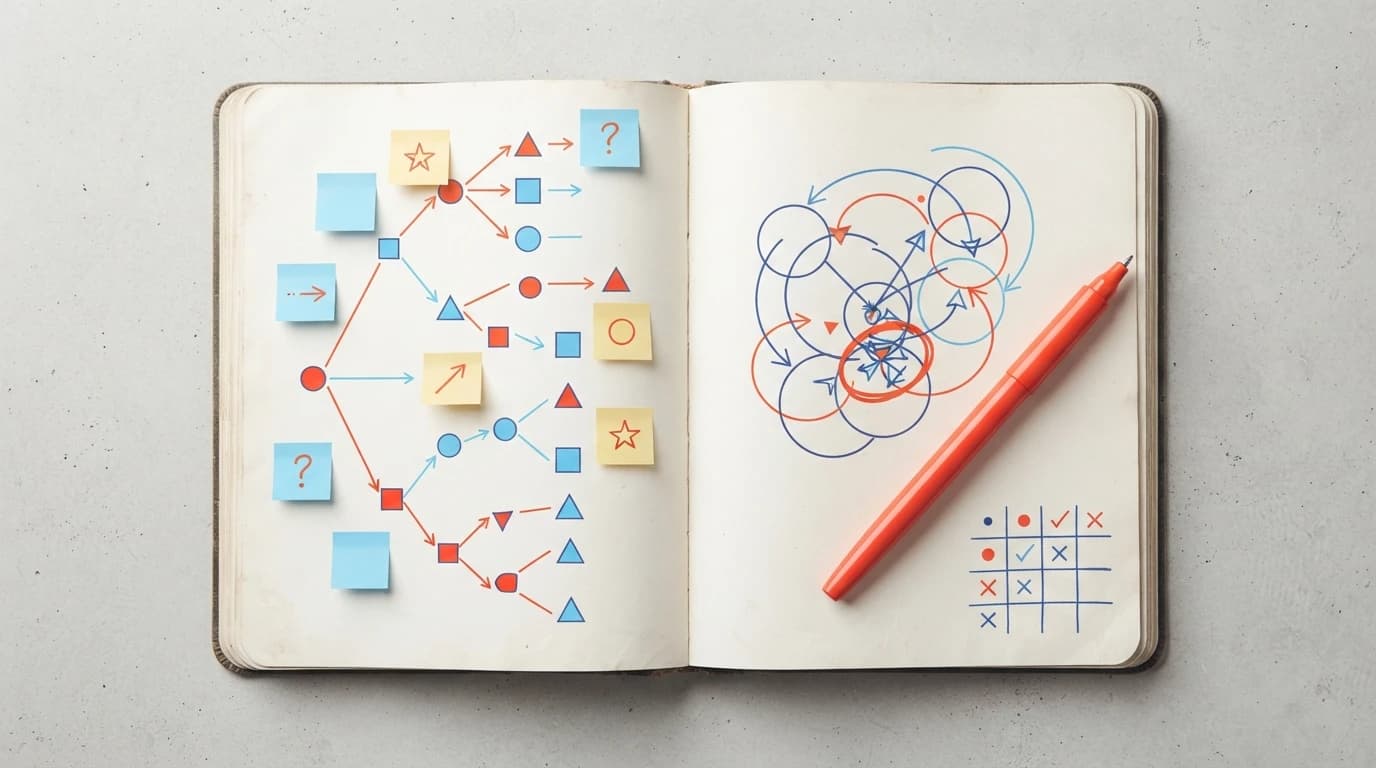
If your team needs a visual artifact after the meeting, convert the proposal and objections into a simple decision flowchart: decision, conditions, owner, review date. For a reference on flowchart conventions, the Wikipedia page on flowcharts is surprisingly practical and consistent.
When not to use consensus (and how to decide fast anyway)
Unilateral decision making is not a failure of culture. It’s a tool. The mistake is using consensus for decisions that are reversible, low-impact, or time-sensitive.
A fast test I use with teams: if the decision is reversible within two weeks and the downside is contained, default to a single owner with input. If the decision is hard to reverse (architecture, pricing model, legal exposure), consensus is usually worth the cost.
Here’s a clean comparison you can copy into your operating docs:
Decision type
Best method
Why
Reversible, low risk
Unilateral with input
Speed beats alignment
Cross-functional, medium risk
Consent (no blocks)
Surfaces risks without paralysis
High stakes, hard to reverse
Full consensus
Trust and buy-in reduce sabotage
Ambiguous, needs evidence
Time-boxed experiment
Data replaces opinion
This is also where “valley of decision” dynamics show up: the messy middle where options look equally bad because you haven’t made tradeoffs explicit. The fix is not more debate. The fix is better option modeling.
Tools help here, but the method matters more than the tool. If you want to turn messy input into a structured options board quickly, Lucid’s approach is to map options with pros, cons, and second-order consequences, then compare in multiple views. That’s the same system analysis discipline, just made faster.
A practical consensus decision making workflow you can run in 45 minutes
Here’s the real-world cadence I recommend for most teams. It combines the techniques above into a single decision process you can repeat weekly.
Start with a pre-read that states the decision, constraints, and 2-4 options. If you can’t list options, you are not ready for consensus.
In the meeting, run silent voting first to avoid anchoring. Then run gradients of agreement to measure support and locate objections. Finish with structured rounds focused on objections, not preferences. If you end with “3s” across the board, decide anyway and attach mitigations plus a review date.
One operational detail that changes everything: assign a single “decision owner” even in consensus. Consensus is a method for arriving at a decision, not a substitute for accountability. The owner updates the doc, tracks mitigations, and triggers the review.
If you’re building your team’s standard operating system for decisions, keep a library of frameworks and match them to decision types. We maintain that kind of library in product orgs because it prevents reinvention and reduces conflict. Use How to Choose a Decision Framework for Your Team as the starting point, then evolve it based on what actually breaks in your meetings.
Frequently Asked Questions
What are the 7 stages of decision-making?
A common 7-stage decision making process is: identify the problem, gather information, generate options, evaluate options, choose, implement, and review. In consensus settings, the “evaluate” stage needs explicit criteria and objection handling or it turns into circular debate.
What is a decision-making matrix?
A decision-making matrix is a table that scores options against criteria like cost, risk, and time-to-value. It’s useful in group decision making because it forces people to state what they value, not just what they prefer.
How to show a decision in a flow chart?
Use a decision flowchart to document the decision point, the conditions that must be true, and the next step for each branch. Keep it simple: one decision diamond, a few outcomes, and clear owners so the chart is actionable.
How to make a simple decision matrix?
Pick 3-5 criteria, assign a 1-5 score per option, and add a short note explaining each score. The notes matter more than the math because they capture decision logic and expose hidden assumptions.
Take your next meeting and run one change, not five. If your team keeps looping, start with silent voting plus gradients of agreement, then lock in structured rounds for objections. When you’re ready to model options and consequences faster, create a Lucid decision board by starting at Lucid account registration and paste in the dilemma exactly as your team described it in Slack.