Backward Planning Model Template for Launches | Lucid
Backward Planning Model Template for Launches
10 min read
Decision framework thinking is the fastest way I know to turn a launch date from a vague target into a chain of truths you can actually execute. This backward planning model template gives you a copyable structure: end-state inputs, milestone gates, dependencies, owners, decision checkpoints, buffers, and contingencies so your plan stays coherent when reality changes.
What launch inputs define the end state?
The backward planning model fails when the “end state” is just a date and a slogan. You need an end state that is testable and cross-functional: what must be true on launch day for the launch to be considered “real” and not a soft rollout that surprises Support and Sales.
In practice, I define end state inputs in four buckets:
1) Customer outcome gates
What a user can do, end-to-end, without a human saving them. Example: “New users can sign up, complete onboarding, and reach the first value moment in under 5 minutes with <2% error rate.”
2) Distribution readiness gates
What must be live in channels: pricing page, docs, SEO landing pages, email sequences, app store metadata, partner enablement. If you have “announce” without “where does traffic go,” you do not have a launch.
3) Operational readiness gates
Support macros, on-call schedule, escalation paths, internal training, analytics dashboards, incident playbooks. Launches fail quietly when the team cannot see what’s happening.
4) Compliance and risk gates
Security review, legal sign-off, accessibility checks, data retention, vendor approvals. These are the classic “we forgot” items that explode timelines.
A useful technique is to write each gate as evidence, not intention. “Security reviewed” is weak. “Security ticket closed with severity 0 open findings” is strong.
If you want a broader lens on selecting the right structure for different teams, how to choose a decision framework for your team is a good calibration piece before you lock your launch planning process.
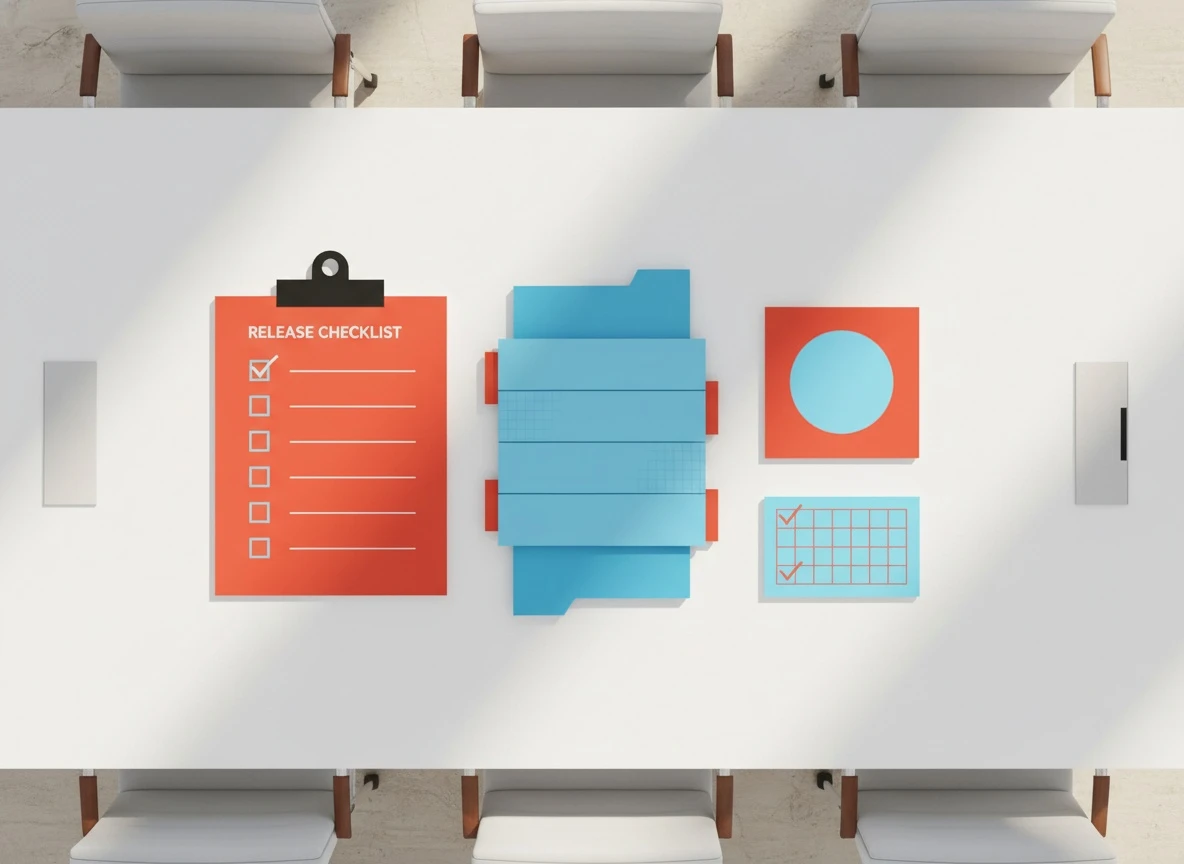
End-state gate checklist (copyable)
Use this as your minimum viable end state. If a line does not apply, explicitly mark it “N/A” and why.
Gate category
Gate (must be true)
Evidence artifact
Owner
Deadline
Customer outcome
Core user journey works end-to-end
Recorded walkthrough + QA sign-off
PM + QA
Launch day minus X
Distribution
Launch landing page live
Published URL + tracking tags validated
Marketing
Launch day minus X
Operations
Support ready for top 10 issues
Macro doc + training attendance
Support lead
Launch day minus X
Risk
Security and legal approvals complete
Approved tickets + sign-off notes
Security + Legal
Launch day minus X
For risk gates, cite real standards when you can. For example, if you operate in regulated contexts, anchor your security gate language to recognized controls like the NIST Cybersecurity Framework so “done” is not subjective.
How do you translate the end date into milestones?
Backward planning model work is mostly lead-time math. The biggest planning mistake I see is converting the end date into a list of tasks, then pretending tasks equal progress. Milestones should represent state changes that reduce launch risk.
Start by defining milestone blocks that match how launches actually move:
Now work backward from the launch date and assign gating criteria to each milestone. A gate is a pass-fail rule. If you cannot write the gate, you do not have a milestone.
Here’s the template I use most often for teams shipping a meaningful product change (not a tiny feature flag). Adjust the lead times based on your org, but keep the structure.
Milestone
Latest finish date (working backward)
Gating criteria (pass-fail)
Typical lead time
Notes
Launch day
T
All end-state gates met
0
No open sev-1 issues
Release candidate ready
T-5
RC build deployed to prod-like env; rollback tested
Two external benchmarks I use to prevent fantasy timelines:
If you rely on organic acquisition, content lead times are real. Google’s own guidance on building helpful content is a reminder that quality and clarity matter more than volume. Use Google Search Central’s guidance on helpful content to define what “ready to publish” means for launch pages.
If you need a release train, treat it like an operations system. The DORA metrics research is a solid reference point for what high-performing delivery looks like and why last-minute heroics are not a strategy.
How do you map dependencies and owners without bloating scope?
Dependencies are where backward planning model templates usually collapse into bloated spreadsheets. The fix is to map dependencies at the milestone level, not the task level, and to force a single accountable owner for each gate.
I use a simple rule: if a dependency does not change the critical path, it does not belong in the dependency map. Track it elsewhere. Your planning artifact should protect focus, not document every thread.
Dependency mapping table (milestone-level)
Milestone gate
Depends on
Dependency type
Owner
What “unblocked” means
Security sign-off complete
Threat model review
Hard
Security lead
Ticket closed with no high findings
Marketing assets complete
Final positioning
Soft
PMM
Messaging doc approved by PM + Sales
RC ready
Feature freeze
Hard
Eng lead
No new features merged after freeze
Support readiness
Known-issues list
Soft
PM
Top issues documented with workarounds
Hard dependencies block progress. Soft dependencies increase risk if late but do not strictly block. Calling this out prevents teams from treating every late input as a fire drill.
To avoid scope creep, make “scope locked” a real milestone with a decision rule: any change after that point must go through a checkpoint with explicit tradeoffs. This is where a lightweight decision model beats endless Slack debates.
If you want deeper background on how teams operationalize frameworks without turning them into bureaucracy, Decision Frameworks: The Complete Guide gives more patterns you can borrow.
How do you track decision points and contingencies?
Decision points are the missing layer in most launch plans. A plan without decision checkpoints is just optimism with dates.
A decision checkpoint answers three things:
What decision must be made? (Ship, slip, cut scope, change channel mix.)
What criteria decide it? (Quality thresholds, readiness gates, risk acceptance.)
What are the pre-approved options? (So you do not invent choices under pressure.)
This is where a decision making matrix or multiple criteria decision analysis (MCDA) becomes practical instead of academic. You are weighing options under uncertainty, with constraints, and with asymmetric risk.
Decision checkpoint template (copyable)
Checkpoint date
Decision
Options (pre-approved)
Criteria
Owner
If “no,” then
T-25
Lock scope
A) Full scope B) Cut non-critical C) Split into phased launch
Critical bugs, eng capacity, GTM readiness
PM
Trigger replan and comms
T-12
Go/no-go for launch date
A) Launch on T B) Slip 1 week C) Beta only
Sev-1 count, security status, RC readiness
GM/Lead
Switch to contingency plan
T-5
Release candidate acceptance
A) Promote RC B) Patch and retest C) Rollback
Test pass rate, performance, rollback test
Eng lead
Freeze continues
A strong checkpoint has a contingency option that protects the business. For example: “Beta only” keeps learning and momentum without forcing a public promise you cannot keep.
If you prefer to visualize this as a decision flowchart, do it, but keep it tight. A one-page flowchart beats a 40-node tree diagram that nobody updates.
Storing milestones as option sets in a decision board (so changes do not break logic)
Here’s the workflow we built Lucid for, because I got tired of launch plans that shattered the moment a single dependency slipped.
Instead of treating each milestone as a fixed row in a spreadsheet, store it as an option set:
Consequences: what breaks downstream if you pick the lightweight option
Dependencies: what each option requires (PMM review vs full design cycle)
When a date moves or a dependency fails, you do not rewrite the whole plan. You swap the option, and the board keeps the decision logic consistent across Grid view, Table view, and Focus view.
If you want a concrete example of how product and UX teams use an AI assistant to structure messy inputs into comparable options, how product managers and UX teams use a personal AI assistant shows the same pattern applied to product decisions.
Backward planning model template (copy-paste)
Paste this into your doc tool as your single source of truth. Then run a 45-minute working session with the owners to fill it in, live. If you cannot fill a cell, you found a risk.
Section
Fill-in field
Your answer
Launch
Launch date (T)
Launch
Launch type
Public / Beta / Internal / Phased
End state
Customer outcome gates (3-5)
End state
Distribution gates (3-5)
End state
Operational gates (3-5)
End state
Compliance and risk gates (1-5)
Milestones
Milestone list (6-10)
Milestones
Gate criteria for each milestone
Dependencies
Hard dependencies (milestone-level)
Dependencies
Soft dependencies (milestone-level)
Ownership
Single owner per gate
Decision points
Checkpoints with options + criteria
Buffers
Explicit buffer blocks (days)
Risks
Top 5 risks + mitigations
Scope
Cut list if schedule slips
Contingencies
Alternate launch paths
Buffers deserve one specific note: put buffers between milestones, not as a vague “extra week” at the end. Buffers protect the critical path only when they sit where uncertainty lives (security review, QA, integration, approvals).
If you need a quick refresher on framework selection and when to use structured comparisons like a decision matrix template, Decision Frameworks: The Complete Guide pairs well with this template.
Practical next step: run the plan as a living decision system
Take your next launch date and fill the template in one sitting with the owners. Then pick two checkpoints (scope lock and go/no-go) and write the options and criteria now, while you are calm.
If you want the plan to survive real-world change, put each milestone into a decision board as an option set so you can re-evaluate tradeoffs without losing the logic chain. Start a board in Lucid and invite the owners so updates happen once, in one place: create your Lucid account to build a launch decision board.